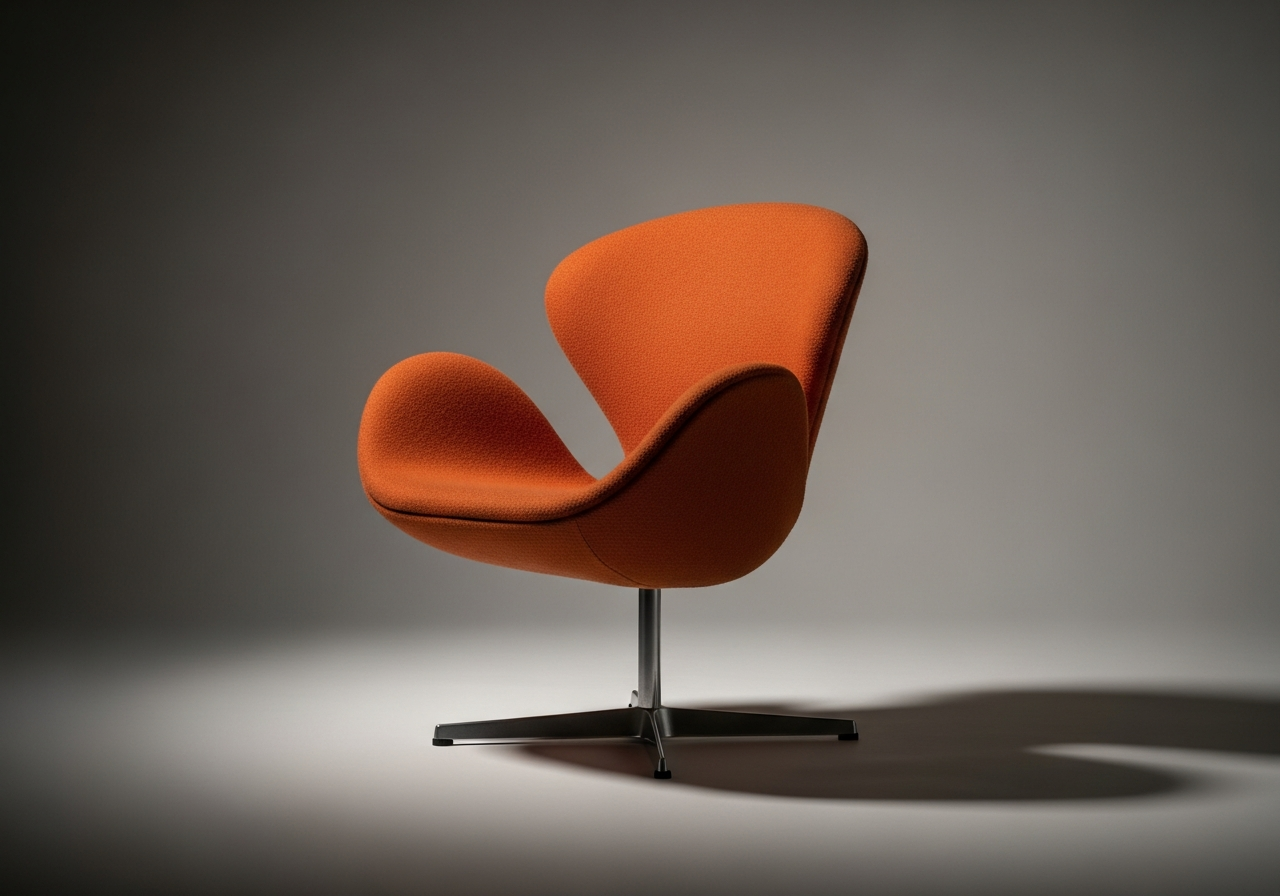
Swan Chair
The lobby of the SAS Royal Hotel in Copenhagen was more than just a space to check in or wait for a cab. It was a stage for a design revolution. In 1958, among the mid-century modernist curves and clean lines, a small revolution in furniture design quietly perched: the Swan Chair. With its seamless, sculptural form and avian grace, it was an object that not only redefined what a chair could look like but also how it could feel. Designed by Danish architectural luminary Arne Jacobsen, the Swan Chair has since transcended its original function to become an icon of modern design, a piece as innovative today as it was over six decades ago.
A Chair Born from Total Design
The Swan Chair was not just a standalone piece of furniture; it was part of a grander vision. Arne Jacobsen, one of the most important figures in 20th-century design, was commissioned to design the SAS Royal Hotel in Copenhagen—a Gesamtkunstwerk, or “total work of art,” where he meticulously crafted everything from the architecture to the cutlery. The Swan Chair was created to populate the hotel’s public spaces, a striking counterpoint to the building’s rectilinear geometry. Its organic, flowing form was a deliberate departure from the straight lines of the interior, offering a sense of softness and approachability in an otherwise formal setting [1][2].
Jacobsen’s design philosophy was rooted in modernism, but it never veered into sterility. He wanted the furniture to be both functional and sculptural, combining comfort with aesthetic intrigue. The Swan Chair was designed to be a conversation piece, its curves inviting users to sit, linger, and engage. It was a chair that didn’t just occupy a space but transformed it [3].
A Technological Leap Forward: Material and Form
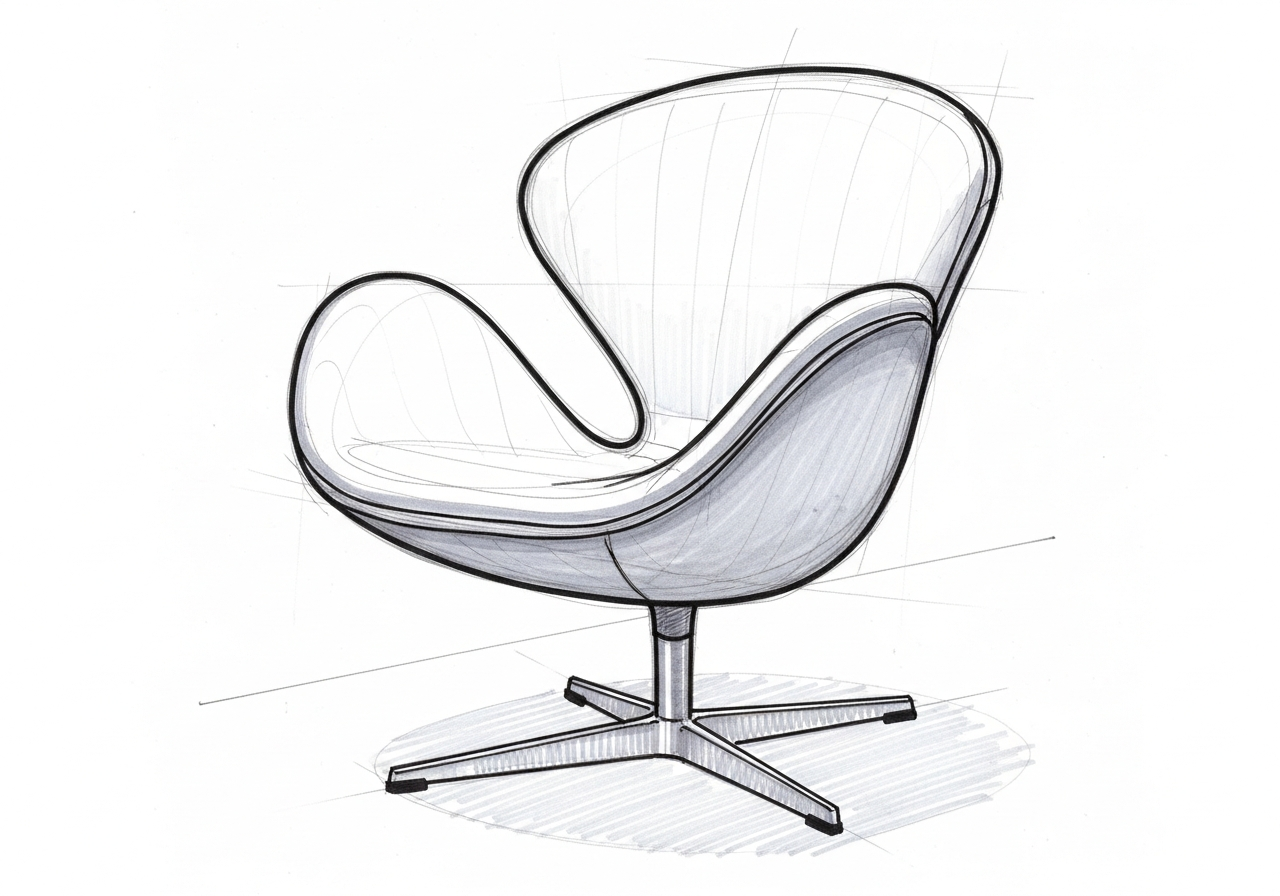
What sets the Swan Chair apart is not only its visual appeal but also its pioneering use of materials and production techniques. Originally envisioned as a plywood construction, the chair’s design evolved as Jacobsen collaborated with Republic of Fritz Hansen, a Danish furniture manufacturer known for its technical prowess. Together, they embraced Styropor, a synthetic material that allowed for the creation of the chair’s seamless, molded shell. This was a radical departure from traditional furniture-making techniques, which often relied on complex assembly processes [2][4].
The chair’s shell is composed of a single piece of molded fiberglass, padded with cold foam for comfort and upholstered in fabric or leather. This construction method not only gave the chair its signature flowing form but also made it lightweight and durable. The shell rests atop a star-shaped aluminum base, allowing for a full 360-degree swivel—an innovative feature at the time of its creation. Jacobsen meticulously modeled the chair in plaster and clay during the prototyping phase, ensuring that its ergonomic form was as functional as it was beautiful [2][3].
This embrace of modern materials and techniques positioned the Swan Chair as a beacon of post-war innovation, paralleling the work of other mid-century modern pioneers like Eero Saarinen, Charles and Ray Eames, and Florence Knoll. It was a chair that could only have been born in its time, a period when designers were rethinking the relationship between industrial production and artistry [5].
Meet the Designer: Arne Jacobsen
To understand the Swan Chair, one must understand its creator. Arne Jacobsen (1902–1971) was a polymath in the truest sense of the word—a man who straddled architecture, furniture design, and everything in between. Born in Copenhagen, Jacobsen was initially trained as a mason before enrolling at the Royal Danish Academy of Fine Arts, where he studied architecture. His career took off in the 1930s, and by the 1950s, he was a leading figure in the international modernist movement [1][2].
Jacobsen’s approach to design was deeply rooted in the principles of functionalism, but he imbued his work with a warmth and humanity often absent in the stark minimalism of his contemporaries. For the SAS Royal Hotel project, Jacobsen’s attention to detail was legendary—he designed everything from the building’s exterior to its light fixtures, textiles, and furniture. The Swan Chair was one of two lounge chairs created specifically for the hotel, the other being the now equally iconic Egg Chair. Together, these pieces exemplified Jacobsen’s ability to merge form and function, creating objects that were as pleasing to the eye as they were to the body [2][4].
Jacobsen once said, “The primary factor is proportions. Proportions have to be absolutely right. I aim to achieve that balance and then add something extra.” The Swan Chair is a perfect illustration of this philosophy. Its proportions are harmonious and balanced, while its swooping curves and sculptural form provide the “something extra” that elevates it from mere furniture to a work of art [1].
Cultural Cachet: From Hotel Lobbies to Film Screens
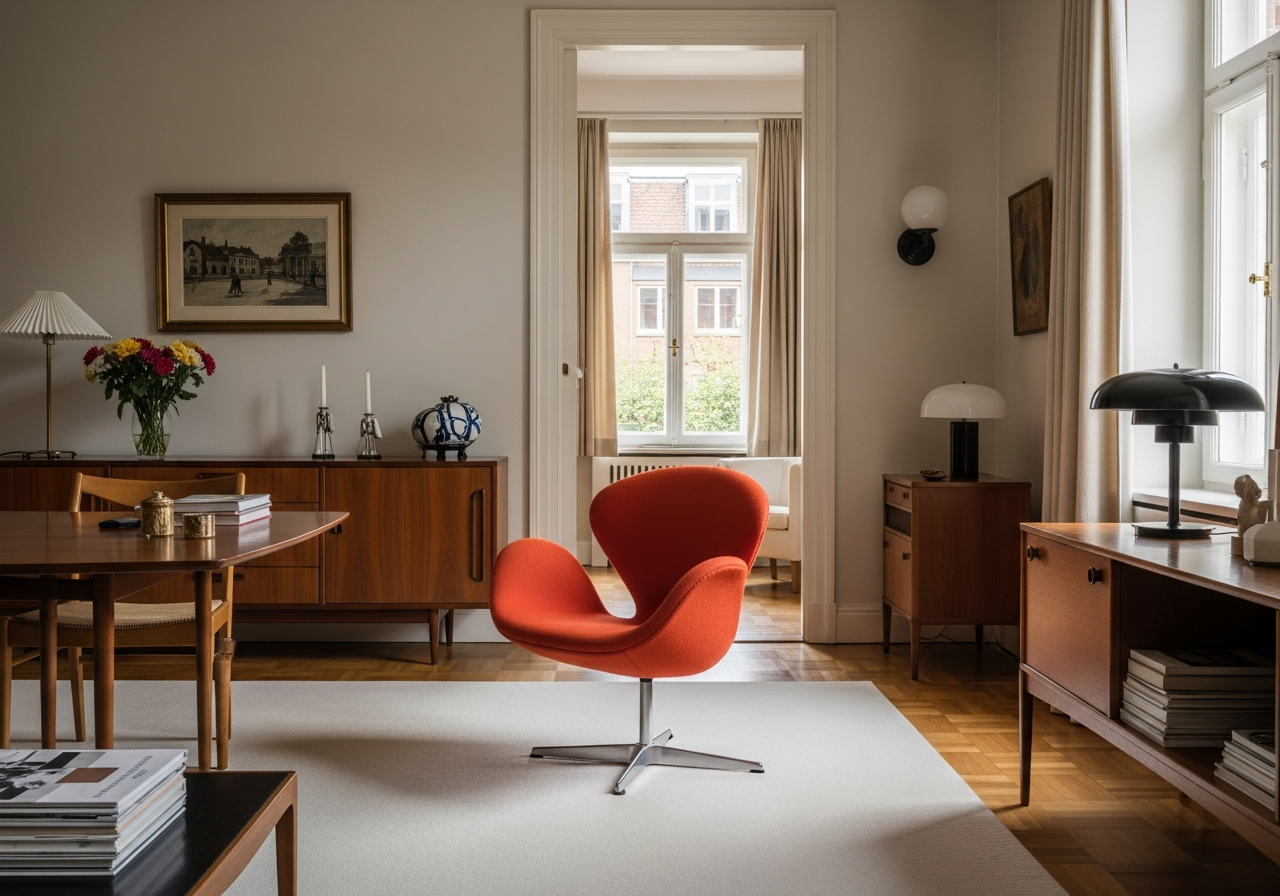
While the Swan Chair was originally designed for a single project, it quickly transcended its hotel origins to become a global design icon. Its sleek, organic form found a natural home in high-end interiors, from corporate boardrooms to private residences. The chair’s association with luxury and modernity made it a favorite in the world of cinema and television, where it often appears as a shorthand for sophistication and taste [3][5].
For collectors, the Swan Chair is a highly sought-after piece. Vintage models, especially those from the 1950s and 1960s, command premium prices at auction, a testament to both their enduring appeal and the quality of their craftsmanship. The chair has also been embraced by museums, with examples included in the permanent collections of institutions like Design Museum Denmark. Its presence in such prestigious settings only cements its status as a design classic [4][5].
Why It Endures
The enduring appeal of the Swan Chair lies in its ability to balance opposites. It is both modern and timeless, sculptural and functional, bold and inviting. Its design is rooted in the technological and aesthetic innovations of its time, yet it feels just as relevant today as it did in 1958.
Moreover, the Swan Chair embodies the best of Arne Jacobsen’s design philosophy. It’s a product of meticulous attention to detail, an understanding of material possibilities, and an unwavering commitment to creating objects that enhance the human experience. In an era when many products are designed to be disposable, the Swan Chair stands as a testament to the power of thoughtful, enduring design [2][3].
Finally, the chair’s cultural resonance cannot be overstated. It has become more than just a piece of furniture; it’s a symbol of mid-century modern elegance, a piece that tells a story of innovation, artistry, and the timeless quest for beauty. Whether you encounter it in a museum, a hotel lobby, or someone’s living room, the Swan Chair invites you to pause and appreciate the possibilities of design.