Panton Chair
A bold, sinuous curve of material seems to hover just above the floor, as if sculpted by the wind itself. It’s impossible to tell where the backrest begins and the seat ends, or where the legs transition into the base. In a world of rigid furniture conventions, the Panton Chair is gloriously fluid — a singular, sweeping gesture that challenges both gravity and tradition. It’s not just a chair; it’s a revolution captured in plastic.
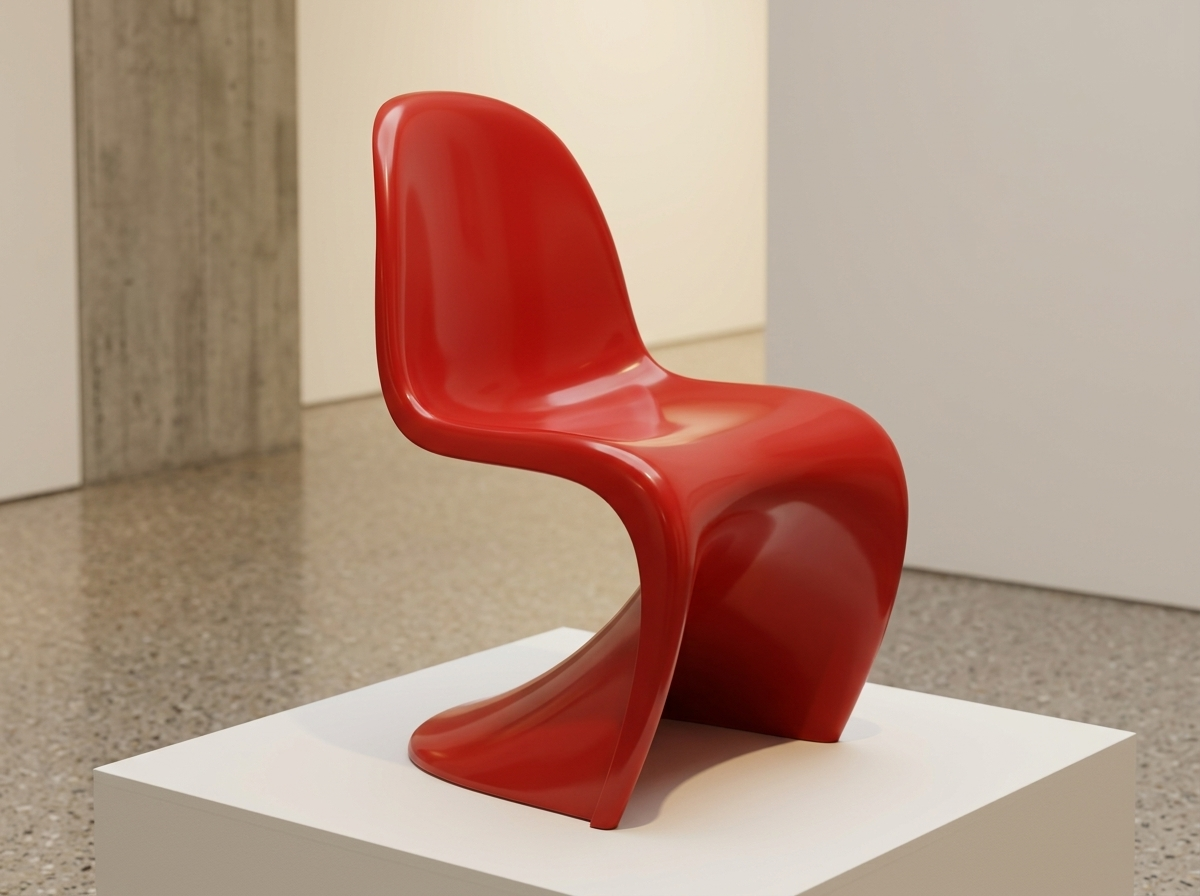
A Vision in Plastic: The Birth of the Panton Chair
To truly grasp the magnitude of the Panton Chair, one must rewind to the early 1960s, when Danish designer Verner Panton first envisioned it. Panton, a graduate of the Royal Danish Academy of Fine Arts and former protégé of modernist architect Arne Jacobsen, was known for his daring, avant-garde approach to design. Where his contemporaries embraced the warmth of wood and the symmetry of Scandinavian minimalism, Panton looked to the future: to new materials, new forms, and new ways of living [1][2].
The idea for the Panton Chair emerged from this radical mindset. Panton imagined a chair that was not merely an object for sitting but a sculptural entity in its own right. He sought to create something unprecedented: a single-form, single-material chair that could be mass-produced, affordable, and visually arresting. “Why do chairs have to look like chairs?” he famously asked. “Why can’t they be something else entirely?” [3]
By 1960, Panton had sketched out the basic concept — a cantilevered chair made of plastic, with no back legs, no joints, and no visible seams. It would be a continuous ribbon of material, flowing seamlessly from base to backrest. Yet, translating this dream into reality would take years of experimentation, innovation, and collaboration.
Shaping the Future: Material and Manufacturing Breakthroughs
The Panton Chair was as much a product of its time as it was a harbinger of things to come. The 1960s were defined by an unbridled enthusiasm for space-age aesthetics and new technologies, and plastic was the material of the moment. Lightweight, malleable, and inexpensive, plastic promised to democratize design, making beautiful and functional objects accessible to the masses [4].
However, the very qualities that made plastic so appealing also made it challenging. Panton’s initial prototypes, created in 1960 using fiberglass-reinforced polyester, proved unfeasible for mass production. The prototypes were hand-laminated, a labor-intensive process that made each chair prohibitively expensive. Moreover, the material was prone to cracking under the strain of the chair’s cantilevered design [5].
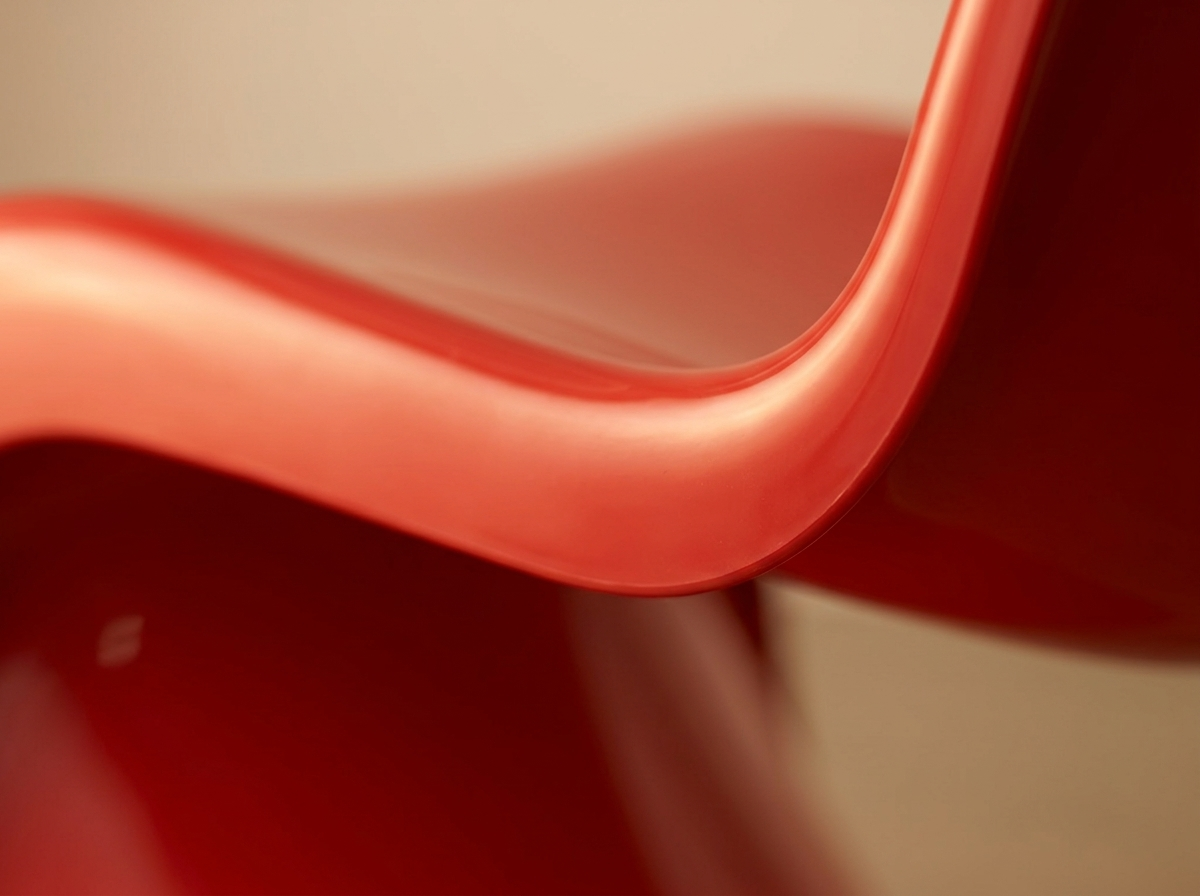
Enter Vitra, the Swiss furniture manufacturer that would become Panton’s most important collaborator. Vitra’s technical expertise and innovative approach to manufacturing allowed them to experiment with new materials and methods. By 1967, they succeeded in producing the first batch of Panton Chairs using injection-molded thermoplastic, a material that was both strong enough to support the cantilevered structure and affordable enough for mass production. This breakthrough marked the beginning of the chair’s commercial journey — and its ascent to design stardom [6].
Pop Culture and Design Stardom
If the Panton Chair’s form was revolutionary, so too was its cultural impact. From the moment it debuted, the chair became a symbol of 1960s optimism and modernity. It made its first major public appearance at the “Visiona 2” exhibition in Cologne in 1970, where Panton created an immersive interior environment filled with his bold, colorful designs. The chair fit perfectly into this psychedelic dreamscape, embodying the era’s spirit of experimentation and boundary-pushing creativity [7].
The Panton Chair quickly found its way into the world of fashion and photography, becoming a favorite prop for stylists and art directors. One of the most iconic images of the chair is a 1970 photograph by Horst P. Horst for Vogue magazine, in which a model reclines languidly on the chair’s undulating surface. The image cemented the chair’s status as a cultural icon, a piece of furniture that transcended its functional purpose to become a symbol of style and sophistication [8].
Over the decades, the Panton Chair has made countless appearances in films, advertisements, and design exhibitions. It has been featured in the permanent collections of prestigious institutions like the Museum of Modern Art (MoMA) in New York, the Design Museum in London, and the Vitra Design Museum in Germany. Its enduring presence in popular culture and high art alike is a testament to its timeless appeal [9].
Meet the Designer: Verner Panton
To understand the Panton Chair, one must understand the man behind it. Verner Panton (1926–1998) was a visionary Danish designer who defied convention at every turn. Born in the small town of Gamtofte, Panton initially studied architecture at the Royal Danish Academy of Fine Arts in Copenhagen. After graduating, he worked in the studio of Arne Jacobsen, the celebrated modernist architect and designer of the iconic Egg and Swan chairs [10].
While Jacobsen’s influence is evident in Panton’s early work, the young designer soon struck out on his own, determined to forge a new path. Panton’s designs were characterized by their bold use of color, innovative materials, and futuristic forms. He was particularly fascinated by the possibilities of plastics, which he saw as the key to creating affordable, mass-producible designs that could transform everyday life [11].
The Panton Chair was, in many ways, the culmination of Panton’s design philosophy. It was functional yet sculptural, playful yet serious, and thoroughly modern. “I wanted to create furniture that was more than just functional,” Panton once said. “I wanted to create something that would inspire people, that would make them smile” [12].
The Legacy of Verner Panton’s Masterpiece
More than half a century after its debut, the Panton Chair remains as relevant and revered as ever. It has been reissued several times, with new materials and finishes allowing it to adapt to contemporary tastes and technological advancements. In 1999, Vitra introduced a version made from polypropylene, a more durable and environmentally friendly plastic that also allowed the chair to be stackable — a feature Panton had originally envisioned but was unable to achieve with earlier materials [13].
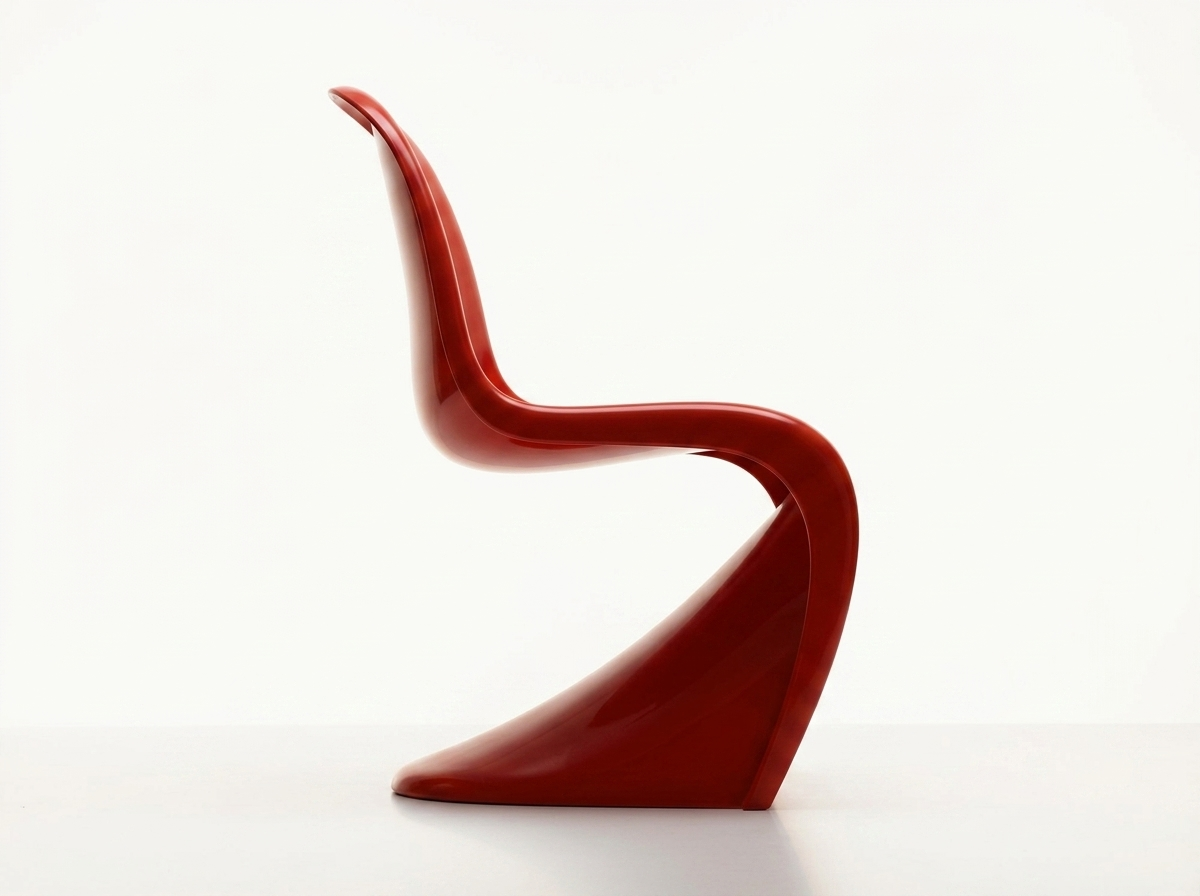
The chair’s enduring appeal lies in its ability to transcend trends and remain perpetually modern. Its sleek, sculptural form feels as fresh today as it did in the 1960s, a testament to Panton’s visionary genius. The chair has also inspired countless imitations and homages, solidifying its status as one of the most influential designs of the 20th century [14].
But the Panton Chair’s legacy is about more than its aesthetic or technical achievements. It represents a moment in history when design was bold, optimistic, and unafraid to challenge conventions. It’s a reminder that great design has the power to transform not just our surroundings, but the way we see the world.
References
- Fiell, Charlotte, and Fiell, Peter. Verner Panton: The Collected Works. Taschen, 2021.
- Vitra Design Museum Archives. “Verner Panton: The Panton Chair.” Accessed 2023.
- Fiell, Charlotte, and Fiell, Peter. Design of the 20th Century. Taschen, 2012.
- Design Museum London Archives. “The Legacy of the Panton Chair.” Accessed 2023.
- Vitra Design Museum Archives. “Material Innovation in the Panton Chair.” Accessed 2023.
- MoMA Collection Database. “Panton Chair.” The Museum of Modern Art, New York. Accessed 2023.
- Fiell, Charlotte, and Fiell, Peter. The Story of Design. Taschen, 2020.
- Wright Auction House Records. Modern Design: Iconic Chairs. Auction Archives, 2022.
- Design Museum London Archives. “Visiona 2 Exhibition Retrospective.” Accessed 2023.
- Fiell, Charlotte, and Fiell, Peter. Verner Panton: The Collected Works. Taschen, 2021.
- Vitra Design Museum Archives. “Verner Panton: The Designer’s Philosophy.” Accessed 2023.
- Fiell, Charlotte, and Fiell, Peter. Design of the 20th Century. Taschen, 2012.
- Vitra Design Museum Archives. “The Evolution of the Panton Chair.” Accessed 2023.
- Fiell, Charlotte, and Fiell, Peter. The Story of Design. Taschen, 2020.