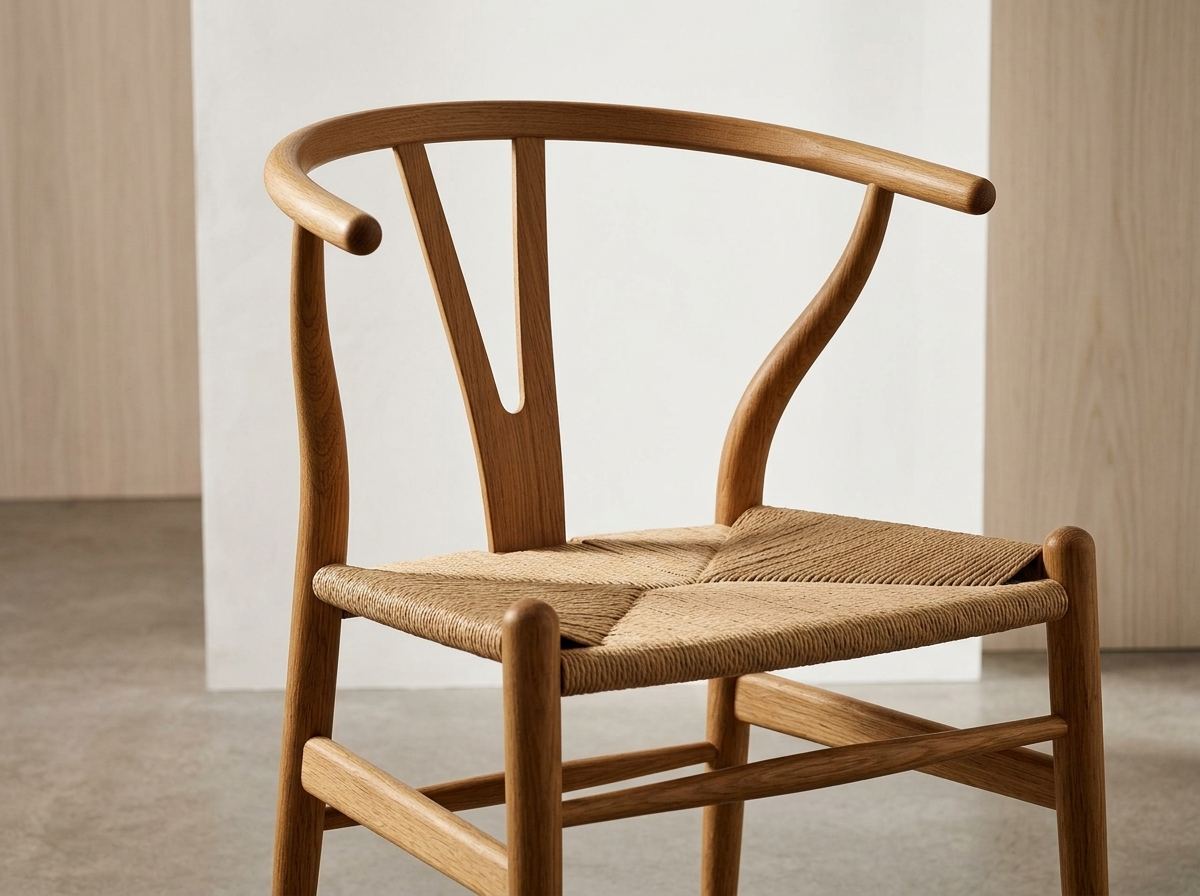
Wishbone Chair (CH24)
The Wishbone Chair: A Masterpiece of Danish Modernism
In a world of fleeting trends, there are certain objects that transcend time, speaking a universal design language of elegance, functionality, and craftsmanship. The Wishbone Chair (CH24), designed by Hans J. Wegner in 1949 and produced by Carl Hansen & Søn since 1950, is one such icon. With its delicate balance of artistry and utility, the chair has become a global ambassador for Danish design, embodying the ethos of simplicity and natural beauty. But behind its graceful Y-shaped backrest and handwoven seat lies a rich story of inspiration, innovation, and enduring cultural significance.
A Chair Born of Tradition and Innovation
Hans J. Wegner was not merely designing furniture—he was crafting sculptural poetry out of wood. The Wishbone Chair, known formally as the CH24, is a testament to this philosophy. Wegner found inspiration in the ancient and the timeless, drawing from the curved forms of Chinese Ming Dynasty chairs. These centuries-old designs, with their seamless integration of form and function, struck a chord with Wegner, who sought to reinterpret their essence for modern living.
The result was a chair that feels both rooted in history and strikingly contemporary. The defining feature, the Y-shaped backrest, provides ergonomic support while creating an open, airy silhouette. This sculptural element is not just a stylistic flourish; it also ensures the chair’s structural integrity. Combined with a gently curved top rail that echoes the human spine, the Wishbone Chair is as inviting to look at as it is to sit in.
Wegner’s material choices further underscore his commitment to blending tradition with innovation. The frame is crafted from solid wood—oak, beech, ash, or walnut—each chosen for its natural beauty and durability. The seat, however, is where Wegner’s ingenuity shines brightest. Made from over 100 meters of paper cord, the handwoven seat was an unconventional choice at the time, introduced during World War II as a substitute for scarce materials like leather. The result is a surface that is not only resilient and comfortable but also underscores the chair’s lightweight, organic aesthetic.
The Art of Craft: 100 Steps to Perfection
Craftsmanship lies at the heart of the Wishbone Chair’s enduring appeal. Each chair undergoes over 100 individual steps in production, many of which are still done by hand—a testament to the artisanal ethos that defines Danish furniture-making.
The process begins with the careful selection of timber, where each piece is evaluated for its grain, color, and strength. The wood is then steam-bent to create the chair’s signature curves, a process requiring both precision and patience. The Y-shaped backrest, carved from a single piece of wood, demands particular skill, as it must balance strength and elegance.
The handwoven paper cord seat is another marvel of craftsmanship. Artisans spend approximately one hour meticulously weaving the cord into a pattern that not only supports the sitter but also complements the chair’s overall design. This attention to detail ensures that each Wishbone Chair is not just a piece of furniture but a functional work of art.
The meticulous production process is also a commitment to sustainability. Carl Hansen & Søn, the original and sole manufacturer of the Wishbone Chair, sources its wood from sustainably managed forests. The paper cord, too, is an eco-friendly material, chosen for its durability and biodegradability.
Danish Modernism’s Global Ambassador
The Wishbone Chair is more than a piece of furniture; it is a cultural icon that encapsulates the ideals of Danish Modernism. Emerging in the mid-20th century, this movement sought to democratize design by creating objects that were beautiful, functional, and accessible. Wegner, a leading figure in this movement, believed that good design should harmonize with its surroundings and enhance daily life.
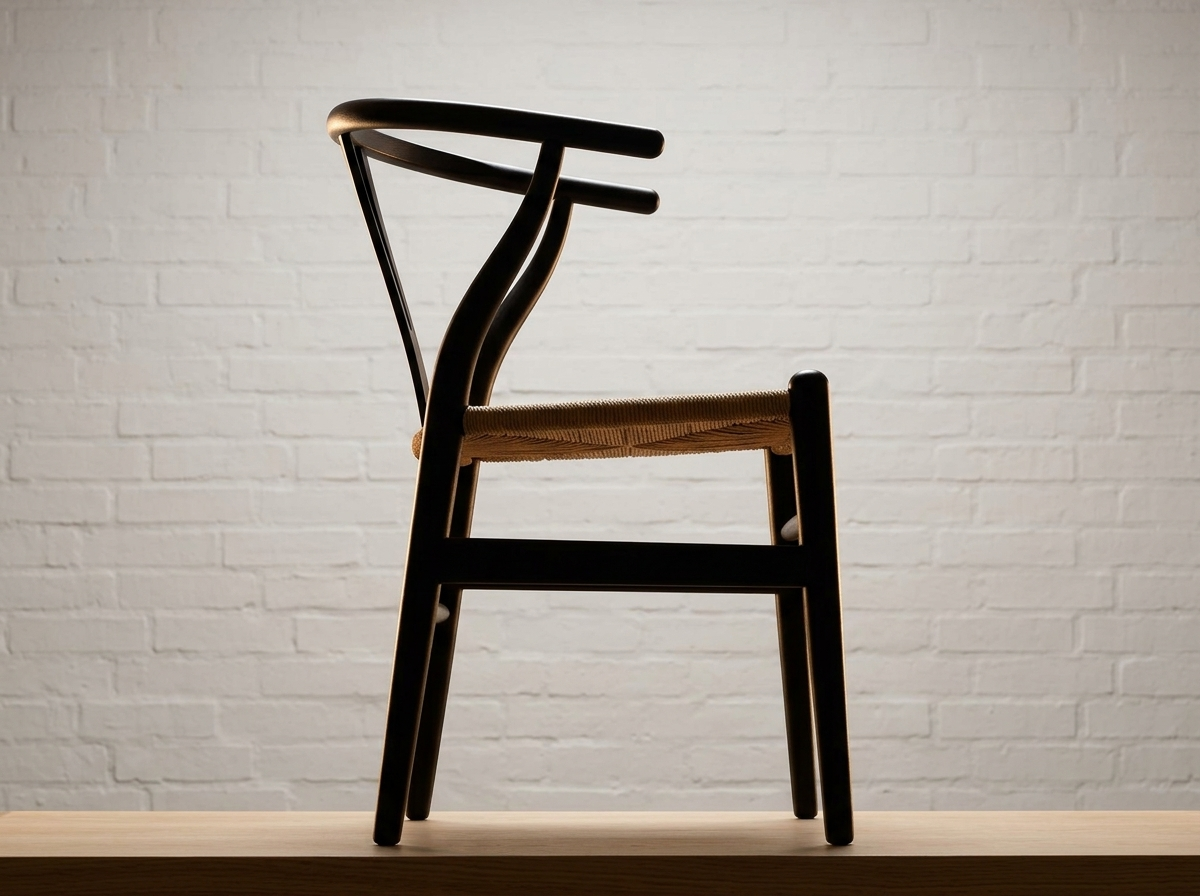
The chair’s minimalist silhouette, with its clean lines and organic forms, is a hallmark of this aesthetic. It is a design that invites touch, with surfaces that are smooth and warm to the hand. Its lightweight frame makes it easy to move, reflecting the Danish Modern emphasis on adaptability and practicality.
Since its debut in 1950, the Wishbone Chair has transcended its Scandinavian roots to become a global symbol of timeless design. It has graced the pages of countless design magazines, appeared in the homes of celebrities, and been showcased in prestigious institutions like the Museum of Modern Art (MoMA) in New York. Its ubiquity in interiors—from minimalist Nordic homes to eclectic contemporary spaces—attests to its universal appeal.
Meet the Designer: Hans J. Wegner
Hans Jørgensen Wegner (1914–2007) was a master of modern furniture design, often referred to as “the master of the chair.” Born in Tønder, Denmark, Wegner trained as a cabinetmaker before studying architecture at the Copenhagen School of Arts and Crafts. This dual expertise in craftsmanship and design informed his approach to furniture-making, where he sought to create pieces that were both functional and sculpturally refined.
Wegner’s career took off in the 1940s when he began collaborating with leading Danish furniture manufacturers like Carl Hansen & Søn. His designs, including the Peacock Chair (1947) and the Round Chair (1949), earned him international recognition. It was the Wishbone Chair, however, that cemented his legacy as a pioneer of Danish Modernism.
Wegner believed that “a chair is to have no backside. It should be beautiful from all sides and angles.” This philosophy is evident in the Wishbone Chair, where every curve, joint, and surface is meticulously considered. His work continues to inspire designers and craftsmen around the world, a testament to his enduring influence.
Why It Endures
More than seven decades after its introduction, the Wishbone Chair remains as relevant as ever. Its timeless design, rooted in craftsmanship and natural materials, resonates in an era increasingly focused on sustainability and longevity.
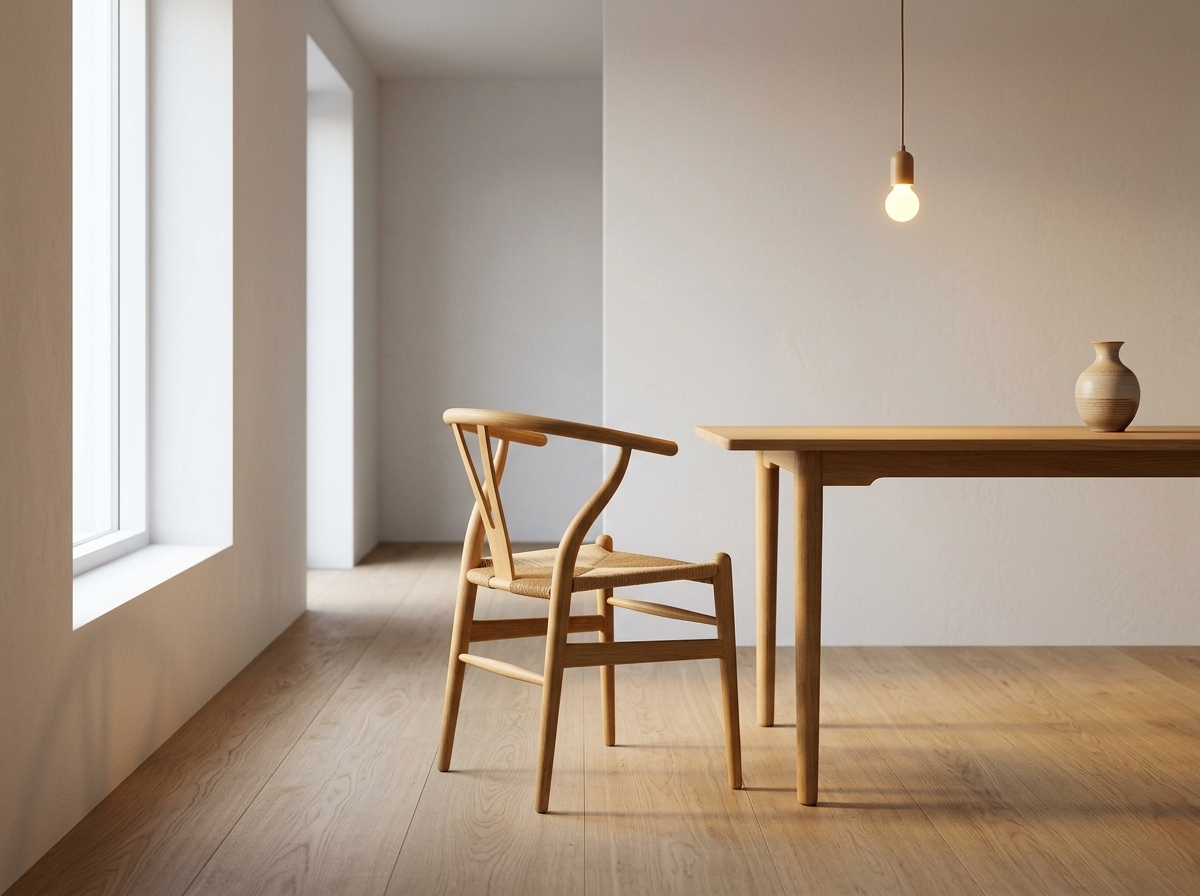
The chair’s versatility is another key to its enduring appeal. Whether paired with a rustic farmhouse table or a sleek glass desk, the Wishbone Chair effortlessly adapts to its surroundings. Its lightweight frame and ergonomic design make it a practical choice for both dining rooms and workspaces, while its sculptural beauty ensures it stands out as a statement piece.
Moreover, the chair’s commitment to quality has ensured its longevity. Many original models from the 1950s are still in use today, their paper cord seats and wooden frames aging gracefully over the decades. This durability, combined with its timeless aesthetic, makes the Wishbone Chair a true heirloom piece—one that is passed down through generations.
In recent years, the rise of counterfeit furniture has sparked debates about authenticity and intellectual property. While imitation may be the sincerest form of flattery, it also underscores the importance of preserving and valuing original designs. By purchasing an authentic Wishbone Chair from Carl Hansen & Søn, buyers not only invest in a piece of design history but also support the artisans who continue to uphold Wegner’s legacy.
The Legacy
The Wishbone Chair is more than just a piece of furniture; it is a cultural artifact that tells the story of an era, a philosophy, and a man. It represents the best of Danish Modernism, a movement that sought to marry beauty and utility in everyday objects. It embodies Hans J. Wegner’s vision of creating furniture that is as functional as it is beautiful, as enduring as it is elegant.
Today, the Wishbone Chair stands as a beacon of timeless design, a reminder that true innovation comes not from chasing trends but from honoring tradition, craftsmanship, and the natural world. It invites us to sit, to pause, and to appreciate the quiet power of good design—a legacy that, like the chair itself, will endure for generations to come.
References
- Carl Hansen & Søn official website: www.carlhansen.com
- Designmuseum Denmark archives: www.designmuseum.dk
- “Hans J. Wegner: Just One Good Chair” (Design Museum Denmark exhibition catalog, 2014).
- “Scandinavian Design” by Charlotte and Peter Fiell (2002).
- “Hans J. Wegner: A Nordic Design Icon” by Christian Holmsted Olesen (2014).
- MoMA collection database: www.moma.org
- “Danish Modern” by Andrew Hollingsworth (2008).