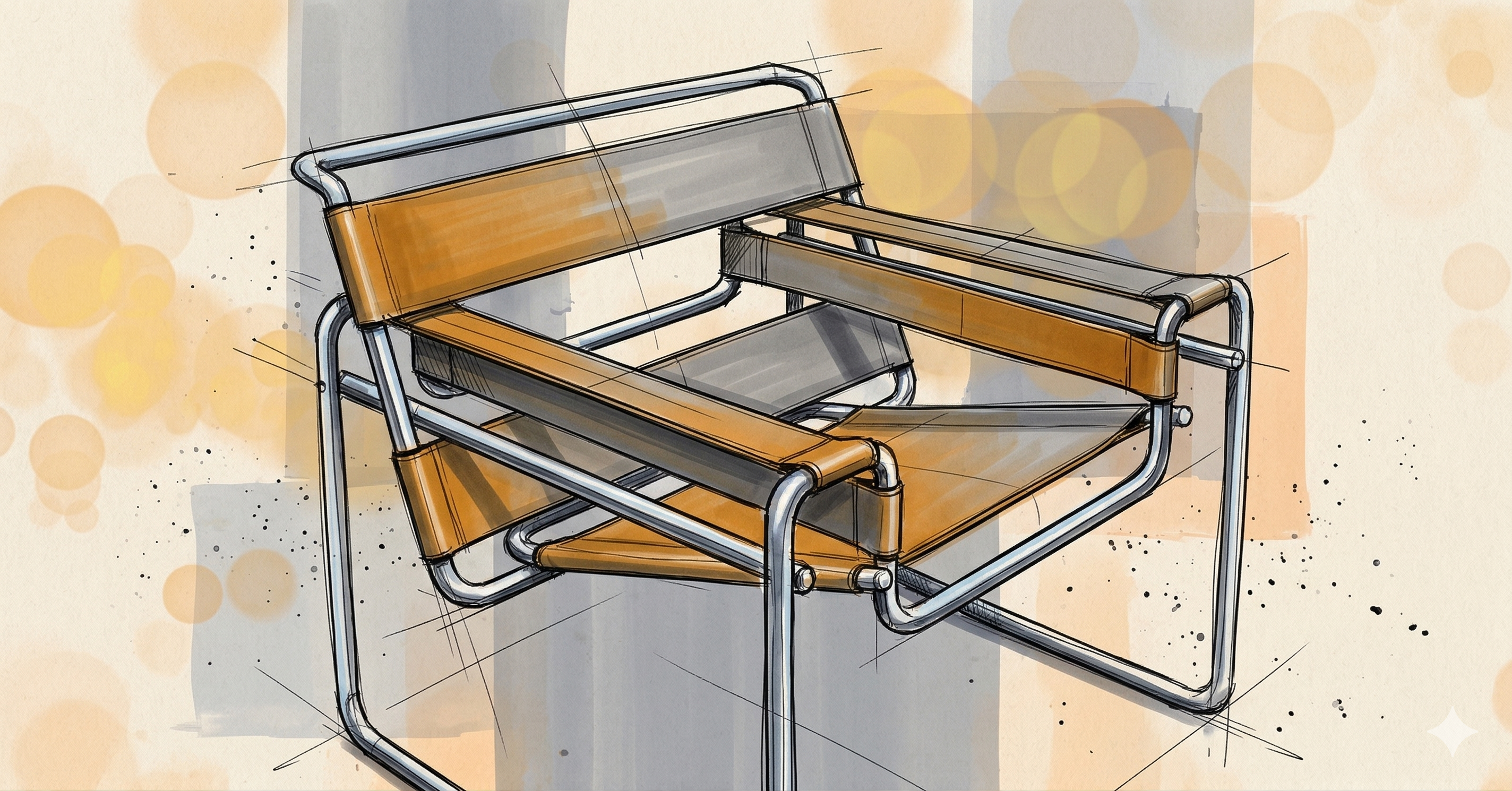
Wassily Chair
The moment you sit in a Wassily Chair, you are not merely sinking into a piece of furniture; you are engaging with a legacy steeped in innovation, artistic fervor, and the spirit of the Bauhaus movement. Designed by the Hungarian architect Marcel Breuer in 1925, this striking chair embodies the essence of modernism. Its tubular steel frame and leather straps usher in an era of design where form and function are harmoniously intertwined. As you lean back, feeling the seamless contours and the surprisingly comfortable stretch of leather, you can almost hear the echoes of its history—the whispers of avant-garde artists, revolutionary techniques, and a cultural milieu that dared to redefine aesthetics.
The Birth of an Icon: Design and Materials
The Wassily Chair, also known as Model B3, was born out of Breuer’s experimentation with materials and forms. Initially conceived for the faculty housing at the Bauhaus, where Breuer both studied and later taught, the chair’s design was heavily influenced by the structure of an Adler bicycle, a revelation that sparked Breuer’s fascination with bent steel tubing [1]. This innovative material, chrome-plated tubular steel, was groundbreaking in the 1920s, allowing for a lightweight yet sturdy construction that defied the bulky furniture of previous eras.
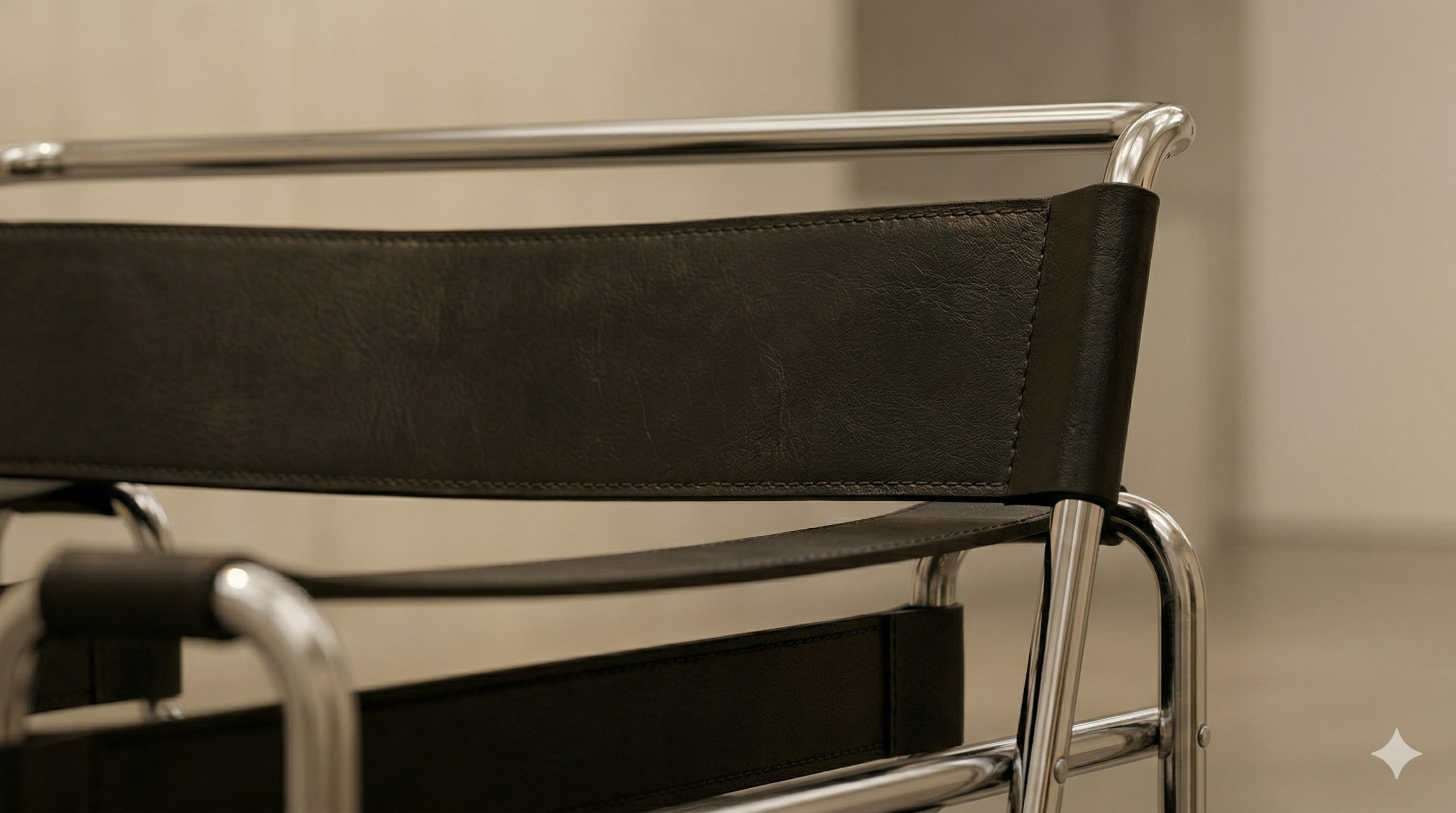
Breuer’s choice of materials was not merely aesthetic; it was a statement against the traditional furniture-making ethos. The leather straps that form the seat and backrest are stretched around the frame, creating a dynamic tension that enhances comfort without compromising on style. The use of seamless steel tubing, made possible by the Mannesmann process, eliminated the need for welding, resulting in a clean, sleek silhouette that has become emblematic of modern design [2]. This marriage of material and form was revolutionary, positioning the Wassily Chair as a harbinger of the minimalist movement that would follow.
The Exhibition That Changed Everything
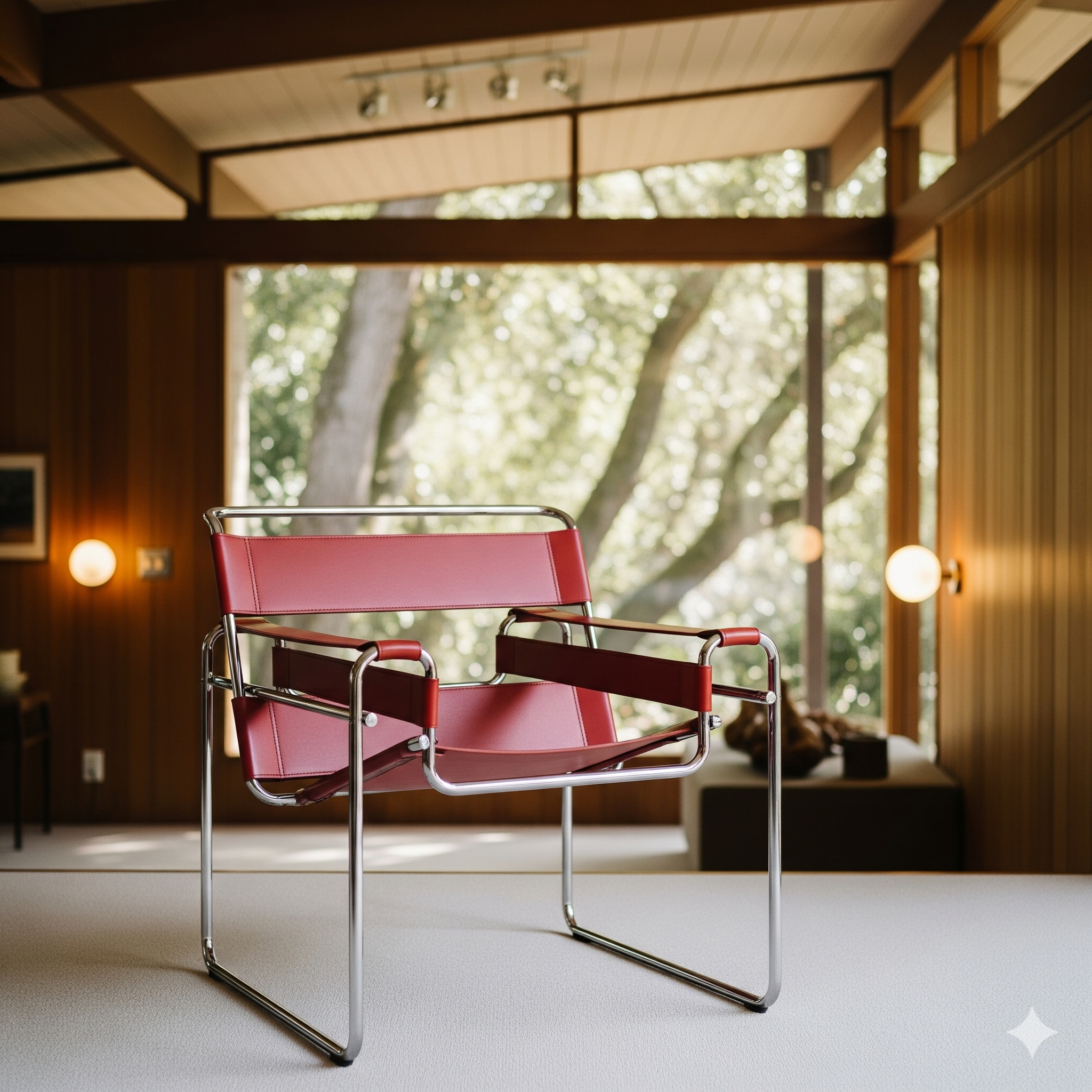
In 1927, the Wassily Chair made its public debut, marking a pivotal moment in the exposition of modernist design principles. It was showcased as part of the first display of the International Style—an exhibition that celebrated the new architectural and design paradigms emerging in Europe [3]. The chair was not only a functional object but a manifesto, articulating the Bauhaus ideals of efficiency and aesthetic purity.
Though it was not widely produced initially, the chair’s presence in this historic exhibition helped solidify its status as a design icon. It would take several decades for the Wassily Chair to gain the recognition it deserved, particularly during the 1960s when it was reissued by Italian manufacturer Gavina, who renamed it in honor of Wassily Kandinsky, a prominent figure at the Bauhaus and a close associate of Breuer [4]. This reintroduction not only revitalized interest in the chair but also positioned it within the broader narrative of modernist design history.
The Legacy of the Wassily Chair
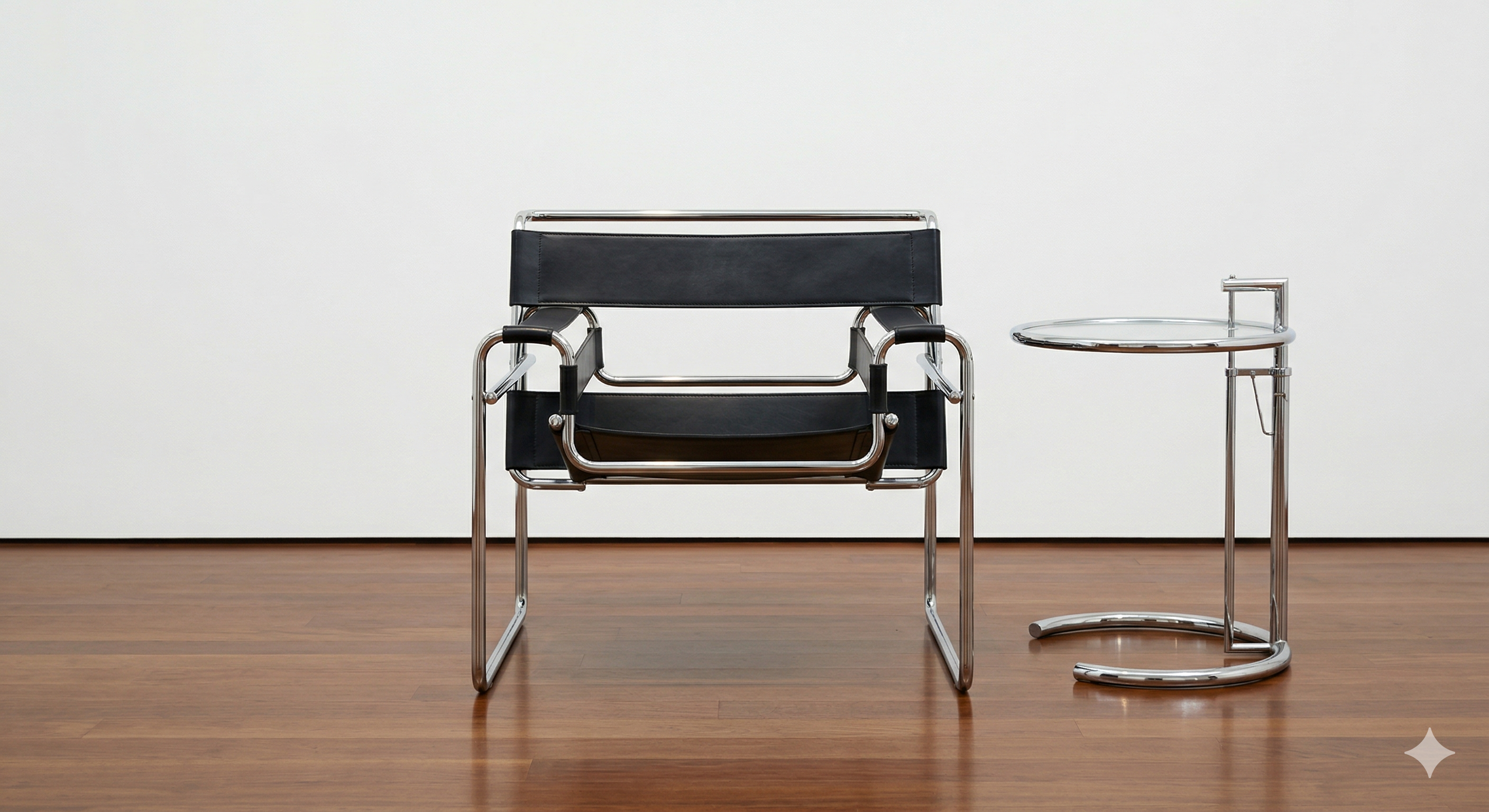
The Wassily Chair has transcended its original context to become a symbol of modernist design. Its minimalist aesthetic and innovative construction techniques have influenced countless designers and remain a staple in both residential and commercial interiors. The chair’s enduring appeal lies in its ability to adapt to various environments while maintaining its iconic status [8].
In 1968, the chair received the Museum of Modern Art Award, further cementing its significance in the annals of design history. It is now part of the permanent collection at MoMA, a testament to its cultural and artistic value [9]. The chair has been reassessed over the decades as a quintessential example of modernist principles, embodying the goals of function and efficiency that were central to the Bauhaus ethos.
Despite its historical pedigree, the Wassily Chair is not without complexities. The collector market for this iconic piece is robust, with authorized reproductions produced by Knoll, which include authenticity certificates. However, the proliferation of unauthorized replicas raises questions about authenticity and the value of design in an age where mass production often compromises the original vision [10].
Yet, the true charm of the Wassily Chair lies in its narrative. Each piece carries with it the weight of its history, the craftsmanship of its creator, and the spirit of an era that sought to redefine the boundaries of art and design. As a result, the Wassily Chair is more than just furniture; it is a dialogue between the past and present, a testament to human ingenuity and the unyielding pursuit of beauty.
Why It Endures: Cultural Reception and Influence
The Wassily Chair’s journey from a niche design to a celebrated icon is a reflection of broader cultural shifts. Initially, it was not widely embraced in the 1920s, but by the 1960s, its sleek lines and modern materials resonated with a generation seeking to break free from traditional constraints [11]. This resurgence coincided with a growing appreciation for mid-century modern design, leading to a renewed interest in Breuer’s work.
The chair’s unique structure and innovative materials have influenced a myriad of contemporary furniture designs, reinforcing its role as a cornerstone of modernism. Designers continue to draw inspiration from Breuer’s pioneering techniques, integrating steel and leather into their own creations while paying homage to the Wassily Chair’s timeless elegance [12].
Moreover, the chair’s minimalist design aligns with current trends favoring simplicity and functionality in furniture. In an age where sustainability and resourcefulness are at the forefront of design conversations, the Wassily Chair serves as a reminder of the power of thoughtful design—an object that not only fulfills a practical need but also elevates the aesthetic experience of a space.
As we navigate the complexities of modern living, the Wassily Chair remains a relevant symbol of a design philosophy that champions both form and function, embodying a spirit of innovation that continues to inspire.
In a world increasingly defined by the intersection of technology and design, the Wassily Chair stands as a beacon of what is possible when creativity meets craftsmanship. Its legacy is not merely in its physical presence but in the ideals it represents—a testament to the enduring power of good design to transcend time and trends.
References
- Design Index. “Wassily Chair.” Design Index.
- Smow. “Wassily Chair.” Smow.
- Knoll. “How the Wassily Chair Changed It All.” Knoll.
- Mid Century Mondays. “A Brief History of Marcel Breuer’s Wassily Chair.” Mid Century Mondays.
- Knoll. “Wassily Chair.” Knoll.
- Mid Century Mondays. “A Brief History of Marcel Breuer’s Wassily Chair.” Mid Century Mondays.
- Wikipedia. “Wassily Chair.” Wikipedia.
- Knoll. “How the Wassily Chair Changed It All.” Knoll.
- Learner. “Wassily Chair.” Learner.
- Smow. “Wassily Chair.” Smow.
- Mid Century Mondays. “A Brief History of Marcel Breuer’s Wassily Chair.” Mid Century Mondays.
- Knoll. “How the Wassily Chair Changed It All.” Knoll.