The Chair (JH501)
In 1949, Hans J. Wegner sketched the first lines of what would become one of the most iconic pieces of furniture ever created. It was not just a chair; it was a manifesto of modern design, executed with the kind of reverence for material and craft that only a master artisan could achieve. Dubbed “the most beautiful chair in the world” by Interiors magazine in 1950, the JH501 — now universally known as The Chair — distilled the essence of Danish Modernism into a single, graceful object. Its curved wooden frame, seamless joinery, and tactile charm are so deceptively simple, they verge on the transcendent. And yet, behind its apparent simplicity lies a story of vision, craftsmanship, and cultural resonance that has ensured its place in the pantheon of great design.
A Chair for the Ages: Danish Modernism Perfected
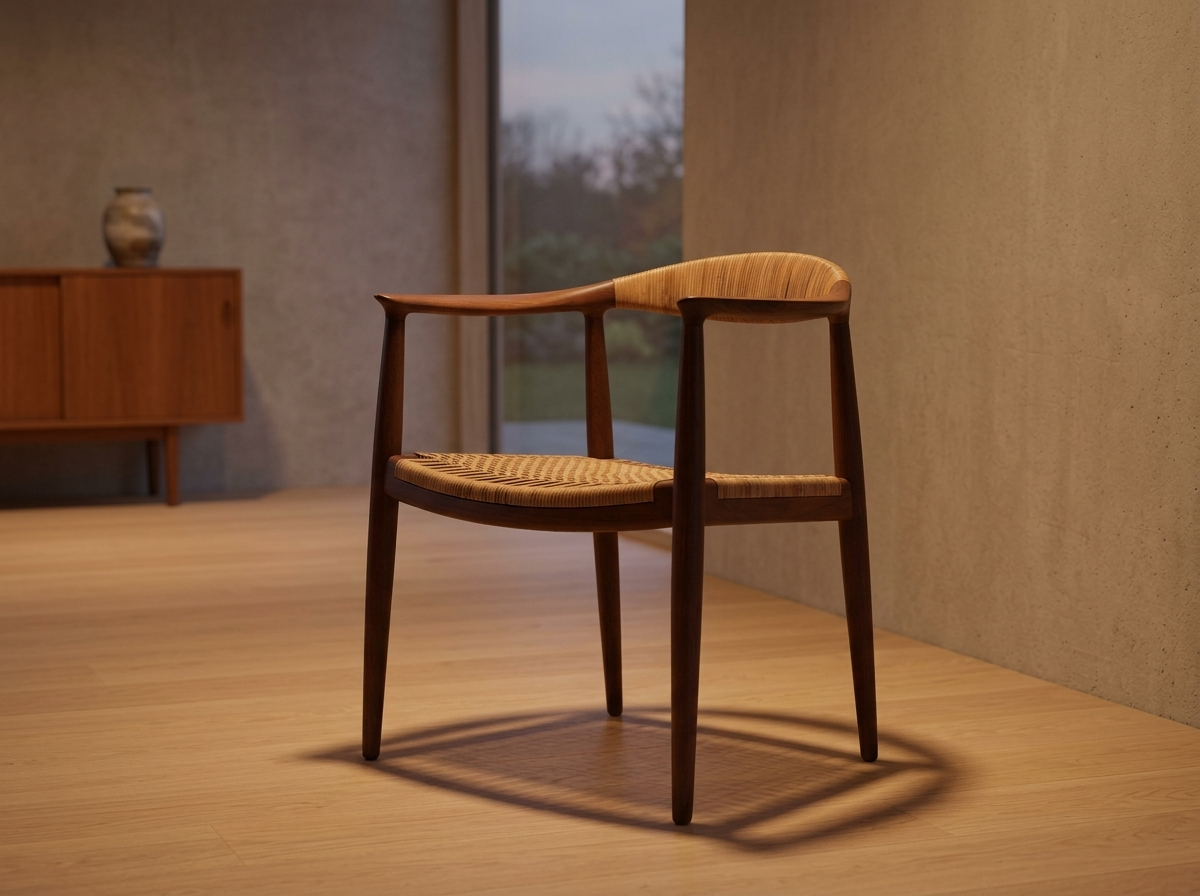
When The Chair debuted at the 1950 Copenhagen Cabinetmakers’ Guild Exhibition, it was both a summation and a reinvention of the Danish Modern ethos. The movement, which had gained traction in the 1930s and 1940s, emphasized simplicity, functionality, and a deep respect for natural materials. Yet, even within this design language, Wegner’s creation stood apart. Its rounded, organic form seemed to soften the hard edges of modernism, inviting the sitter not just to admire it, but to inhabit it.
Wegner described his approach to design as striving for “a continuous process of purification, to cut down to the simplest possible elements of four legs, a seat, and a combined top rail and armrest.” This philosophy is evident in The Chair’s fluid lines and restrained proportions. Nothing about it feels excessive, yet nothing is lacking either. It is a quiet triumph — as much a sculpture as it is a functional piece of furniture.
Hans J. Wegner’s Pursuit of the Ideal Chair
Hans J. Wegner’s career was defined by his relentless exploration of what a chair could and should be. Born in 1914 in Tønder, Denmark, Wegner trained as a cabinetmaker before studying at the Copenhagen School of Arts and Crafts. This dual foundation of hands-on craft and design theory gave him an unparalleled understanding of both the structural and aesthetic potentials of wood.
Wegner often spoke of his aspiration to create furniture that could last for generations, not only in durability but also in relevance. For him, the ideal chair was as much about comfort and usability as it was about beauty. With The Chair, Wegner sought to strike a balance between form and function. The piece was inspired in part by traditional Chinese chairs, especially in the way the backrest and armrests are seamlessly integrated into a single, fluid structure. This organic harmony, which Wegner called “organic functionality,” became a hallmark of his work.
Craftsmanship in Every Curve: Materials and Techniques
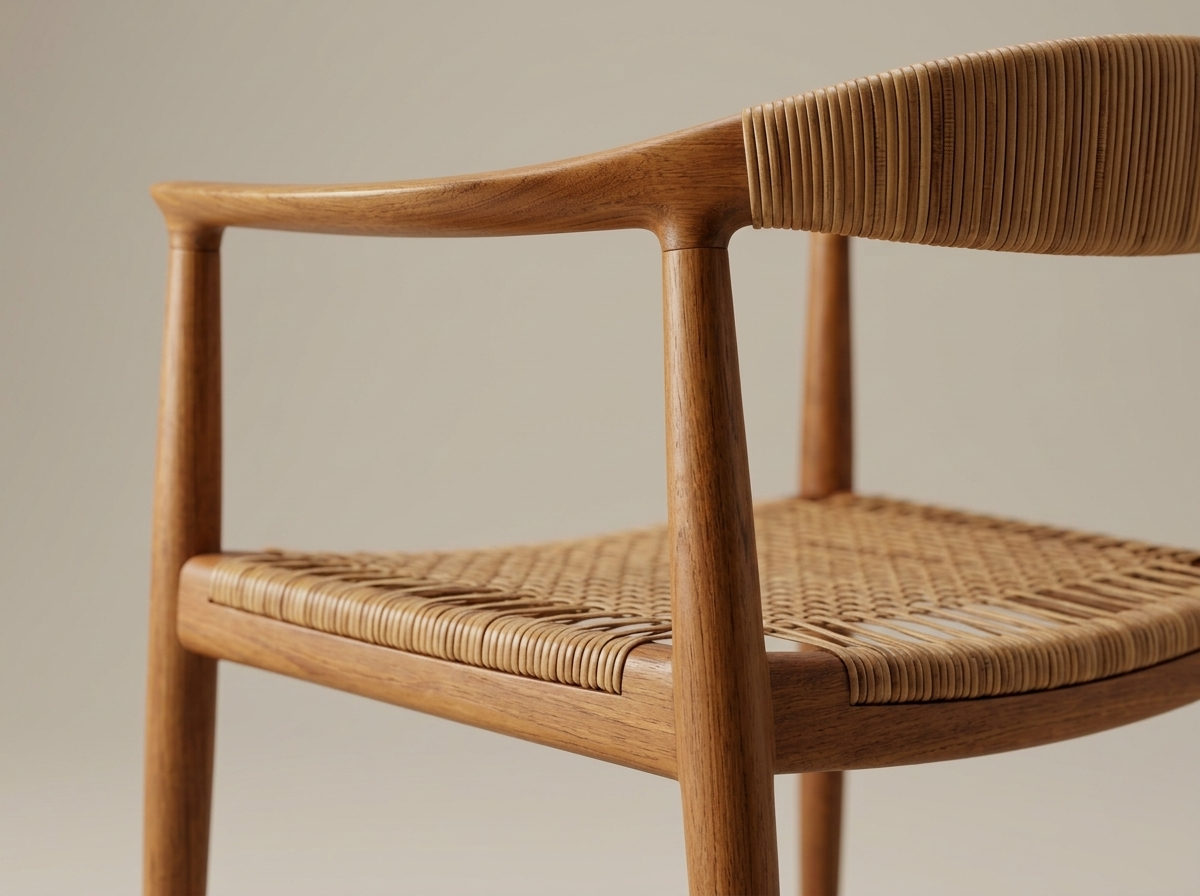
While The Chair may look effortless, its creation is anything but. Every element of its design demands extraordinary skill and precision. Crafted primarily from solid hardwoods like teak, oak, or ash, it showcases the natural beauty of the material, with the grain of the wood often forming a subtle decorative feature in itself. The seat is traditionally made of handwoven cane, an old-world touch that contrasts beautifully with the modernist silhouette.
The structure of The Chair is a masterclass in joinery. Its seamless connections — where armrests curve into legs and backrests merge into supports — are so precise that they appear almost organic, as if the chair were grown rather than made. This level of craftsmanship requires over 100 individual operations, many of them performed by hand. Each joint is meticulously sanded and finished, resulting in a piece that feels as good to the hand as it looks to the eye.
From Copenhagen to the World Stage: A Cultural Icon
The cultural significance of The Chair was cemented on September 26, 1960, when it was chosen as the seating for the first-ever televised U.S. presidential debate between John F. Kennedy and Richard Nixon. Its selection was no accident. The chair, with its understated elegance and modernist pedigree, symbolized not just good taste but also a vision of diplomacy and progress. It was as if the virtues of Danish Modernism — clarity, functionality, and harmony — were being offered as a metaphor for the political moment.
This high-profile debut on the world stage catapulted The Chair into the global consciousness. It became shorthand for sophistication, a favorite of architects, designers, and collectors. Museums took note as well. Today, The Chair resides in the permanent collections of institutions like the Museum of Modern Art in New York and the Design Museum Denmark. It has graced countless interiors, from Scandinavian homes to Hollywood sets, embodying a timelessness that few designs achieve.
Meet the Designer: Hans J. Wegner
Hans J. Wegner’s prolific career produced over 500 chair designs, many of which are now considered benchmarks of 20th-century design. He was part of a golden generation of Danish designers that included Finn Juhl, Arne Jacobsen, and Børge Mogensen. But unlike his peers, Wegner was singularly dedicated to the art of seating. Chairs, he believed, were the most challenging and rewarding pieces to design — a crucible in which form, function, and material had to coexist in perfect harmony.
Wegner’s formative years as a cabinetmaker deeply influenced his approach. He understood wood not just as a material but as a living, breathing entity with its own personality. This sensitivity to material, combined with his belief in the longevity of good design, ensured that his work would endure. Wegner’s ability to fuse traditional craftsmanship with modernist principles has made him one of the most celebrated designers of the 20th century.
The Legacy: Why The Chair Endures
What makes The Chair endure, more than seven decades after its debut? For one, its design is as relevant today as it was in 1950. In an era of fast furniture and disposable decor, its emphasis on craftsmanship and durability feels almost radical. The chair’s sculptural form, which once seemed revolutionary, now feels like a natural extension of the human body — a testament to Wegner’s understanding of ergonomics and material.
But perhaps the secret to The Chair’s longevity lies in its quiet complexity. While it is often celebrated for its simplicity, The Chair is far from simple. Its fluid curves, seamless joints, and handwoven seat are the result of extraordinary skill and countless hours of labor. It is a chair that rewards close inspection, revealing more of its beauty the longer you look at it.
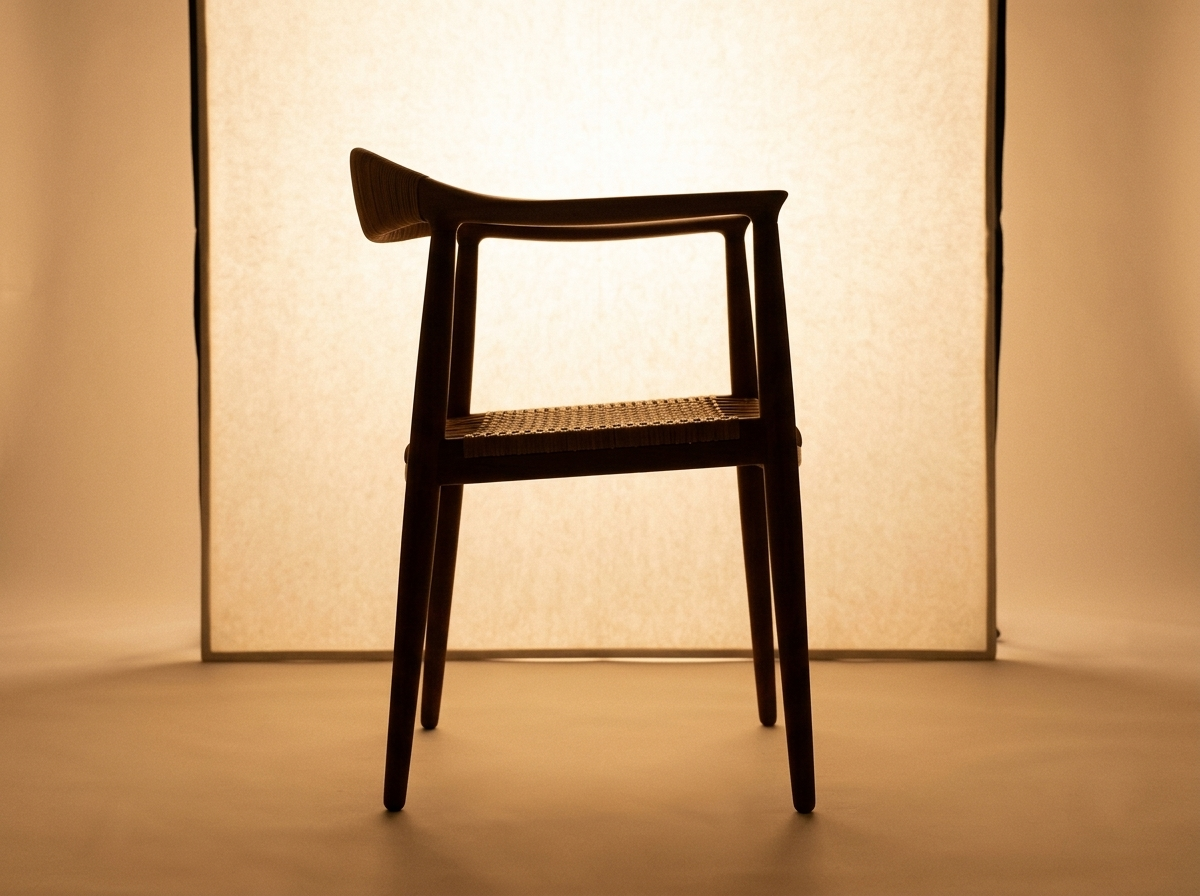
Ultimately, The Chair endures because it transcends its time and place. It is a product of Danish Modernism, but it is not confined by it. It is a chair for everyone and for every era, a universal object that speaks to our shared desire for beauty, comfort, and harmony. As Hans J. Wegner once said, “A chair is to have no backside. It should be beautiful from all sides and angles.” With The Chair, he achieved exactly that.
References
- Noritsugu Oda, Danish Chairs (1999)
- Design Museum Denmark archives
- Interiors magazine, 1950
- MoMA collection archives
- Vitra Design Museum catalog
- The New York Times, 2010 retrospective on Danish Modernism
- Danish Cabinetmakers’ Guild Exhibition catalog, 1950